
 It
ItIt was 3 a.m. in 1988, and he had phoned the studio out of nowhere, insisting he record a song that very night.
The engineer, Milan Bertosa, told him he had 15 minutes to get there. Then the door opened.
“In walks,” Bertosa said, “the largest human being I had seen in my life.”
The man was close to 500 pounds. He eased into the steel chair, and someone passed him a ukulele, a tiny thing against his chest. Bertosa rolled the tape.
One take. No second try, no fixing it later. He sang “Somewhere Over the Rainbow,” and then it was over.
You have heard it. At a wedding. At a funeral. In a hospital room when there were no words left.
That soft ukulele. That voice like warm water, played more than a BILLION times – and almost nobody who plays it knows the man who sang it, or what it cost him.
His name was Israel Kamakawiwoʻole. He grew up in Waianae, the hard working side of Oahu, Native Hawaiian to the bone, and as a boy he picked up a ukulele and never put it down.
He watched the world fly in for the beaches while his own people were pushed to the edges of their own land. So he sang the old Hawaiian songs, the ones the tourists never heard. He didn’t sing to get famous. He sang to remind his people who they were.
He said it plainly, in the Pidgin everybody back home spoke: “Be strong. Know who you are. No be shame. Stand up.”
He wasn’t only a singer anymore. He was something his people could stand behind.
His brother Skippy had sung beside him since they were kids. Then Skippy’s heart gave out at 28, and Israel sang for both of them after that.
But the body Israel lived in was turning on him. By the end he weighed 757 pounds. His heart strained, his lungs strained, and breathing itself became work.
This was the weight he carried his whole life – the thing strangers stared at, the thing that was quietly killing him. And out of that struggling body came the lightest, most weightless sound anyone had EVER heard.
He knew where his body was taking him, and he said it without fear: “I’m not scared for myself for dying. This is just one shell. Because we Hawaiians live in both worlds.”
On June 26th, 1997, at 12:18 in the morning, his lungs gave out for the last time. He was 38 years old.
He gave the whole world a song about dreams coming true. He didn’t live to see 39.
Then Hawaii did something it had NEVER done for a singer. They carried his koa wood casket into the State Capitol and let him lie in state beneath the dome.
He was the third person in the islands’ history given that honor, and the ONLY one who had never held public office. Just a man with a ukulele.
About 10,000 people came to say goodbye.
Two days later they carried his ashes to Makua Beach. Ten thousand came again, standing on the sand, floating out on surfboards and canoes, throwing flowers across the water. And on the highways all over the island, truck drivers leaned on their air horns until it sounded like Hawaii itself was crying out.
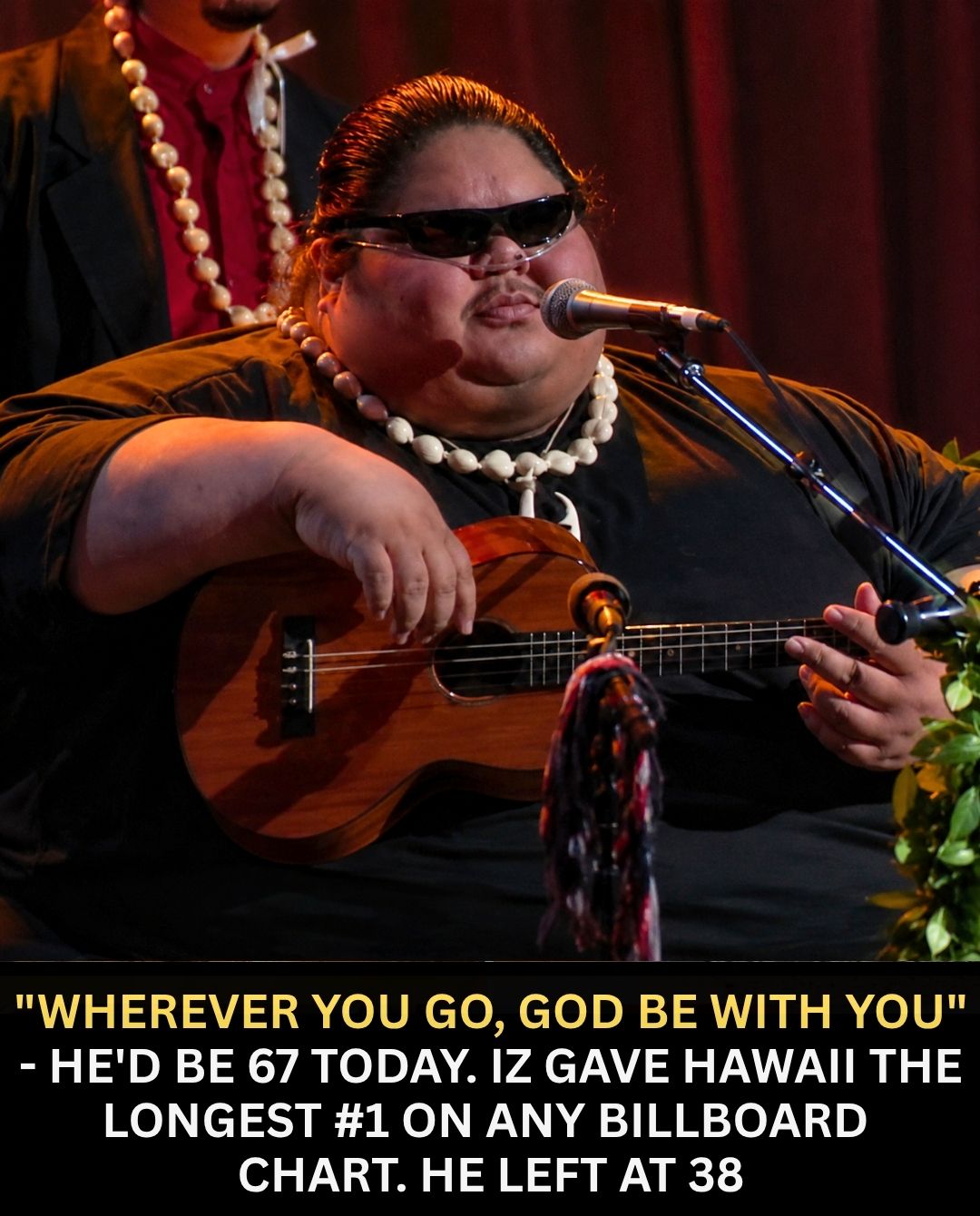
That song he made in one take, at 3 a.m., in a borrowed steel chair, is still the longest running number one in the entire history of the Billboard charts. More than a billion plays on YouTube alone. In 2021 the Library of Congress added it to the recordings America has chosen to preserve forever.
He was born 67 years ago today. May 20th, 1959.
The next time that song finds you, in a quiet kitchen, at someone’s wedding, beside a hospital bed, listen a little closer.
That weightless voice came out of a body that was breaking. The man singing about somewhere over the rainbow already knew he would never get there.
He gave it to us anyway.
That’s the thing about Bruddah Iz. Most people have heard him. Almost nobody knew him


