
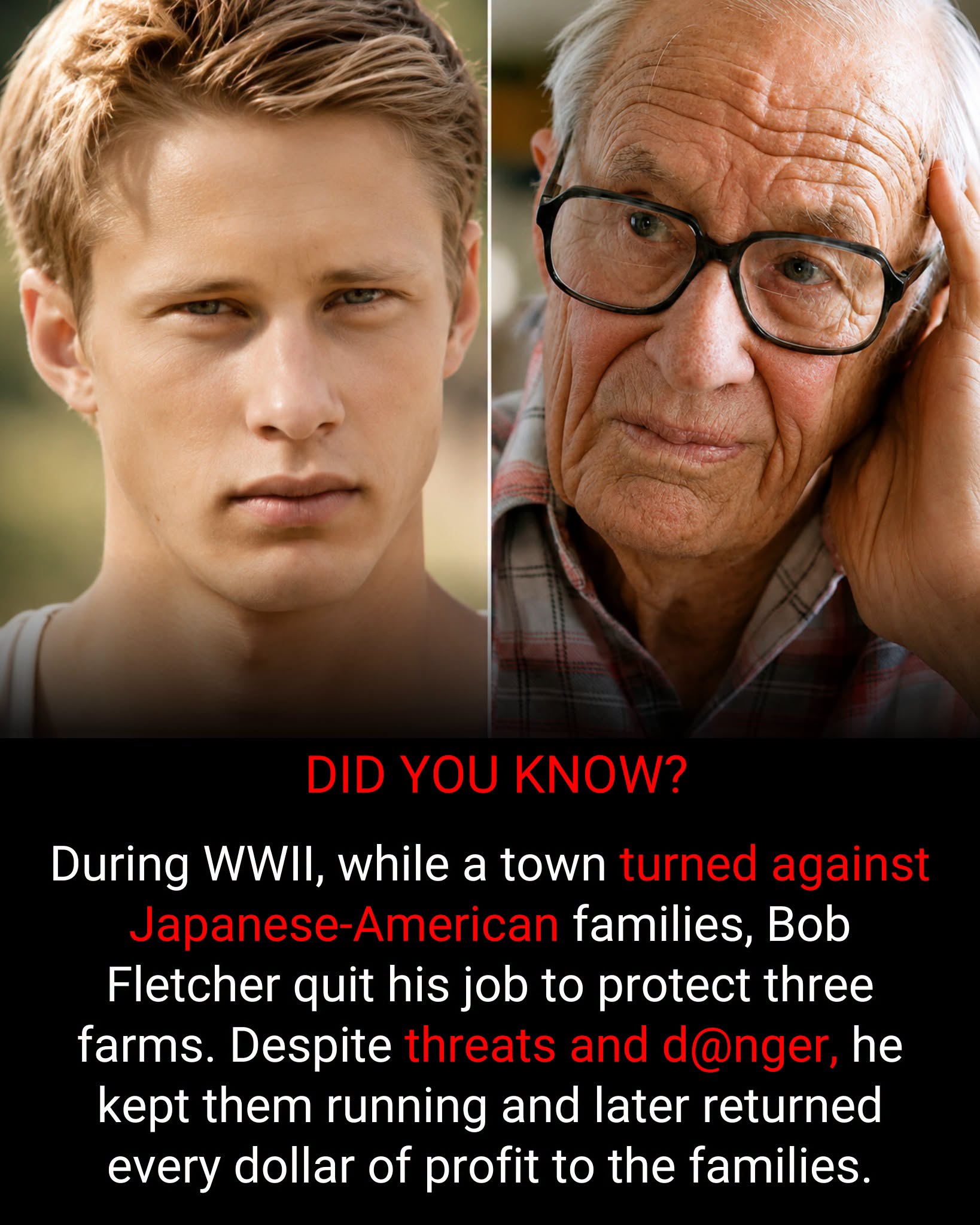

The incredible real-life actions of Bob Fletcher, a California agricultural inspector who risked his livelihood and safety to save the livelihoods of his Japanese-American neighbors during World War II. [1, 2]
The historical details behind this event highlight just how much he sacrificed: [1]
The Background (1942)
Following the signing of Executive Order 9066 in 1942, thousands of Japanese Americans on the West Coast were forcibly evacuated and placed into internment camps. Knowing they were about to lose everything, the Tsukamoto family of Florin, California, approached Fletcher. They asked if he would manage their fruit and grape farms, as well as the farms of two neighboring families—the Okamotos and the Nittas. [1, 2, 3, 4]
The Decision and Hard Labor
- Quitting His Job: Fletcher chose to resign from his stable government job as a state agricultural shipping inspector to manage the farms full-time. [, 2]
- Immense Workload: He took on a total of 90 acres of flame tokay grapes, a crop he had absolutely zero prior experience cultivating. To keep them afloat, he routinely worked exhausting 18-hour days. [, 2, 3, 4]
- Extreme Hostility: He did not just fight physical exhaustion; he also had to endure intense racism and hostility from his community. He was widely taunted, labeled a traitor, and someone even fired a gun at him while he was working in the Tsukamotos’ barn. [, 2, 3, 4, 5]
The Outcome (1945)
Fletcher managed all three properties for more than three consecutive years. While most interned families returned after the war to find their homes vandalized, stolen, or repossessed due to unpaid taxes, the Tsukamotos, Okamotos, and Nittas returned to thriving, fully functional farms. [1, 2, 3]
Fletcher had used the farm income to meticulously pay down all of their taxes and mortgages. Though the families had originally told him he could keep all of the profits, Fletcher flatly refused. He split the money evenly and left the families their half in the bank, untouched, to help them restart their lives. [, 3, 4]
How the Tsukamoto Family Thanked Him
When the Tsukamoto, Okamoto, and Nitta families returned from the internment camps in 1945, they expected to find total ruin. Instead, they were greeted by thriving, profitable farms and meticulously clean homes. [1, 2]
The families expressed their immense gratitude through several profound gestures:
- The Profits: Even though the families completely insisted that Bob keep 100% of the profits from the three years of hard work, he flatly refused. He forced them to split it evenly, leaving half the money safely deposited in their bank accounts to help them rebuild their lives. [1, 2, 3, 4]
- lifelong Preservation of His Legacy: Mary Tsukamoto became a well-known civil rights activist, educator, and author. She co-wrote the historical book We the People: A Story of Internment in America, specifically dedicated to ensuring that Bob Fletcher’s quiet heroism would never be forgotten by history. [1]
- A Centenary Celebration: In 2011, the local Japanese-American community threw Bob a massive 100th birthday celebration attended by over 150 people. At the event, the descendants of the families he saved embraced him, with a daughter of the Nitta family telling him, “We owe you everything”. [1, 2]
His Legacy in the Florin Fire Department
After the war concluded, Bob chose to stay in the local community of Florin, California, and bought his own 54-acre ranch to raise cattle and grow hay. He dedicated the rest of his long life to public service: [1]
- Volunteer and Paid Chief: Bob had actually joined the Florin Fire Department at its very founding in 1942. After the war, he served as the volunteer assistant chief for 20 years, which eventually turned into a full-time, paid position as the Florin Fire Chief for another 12 years until his retirement in 1974. [1, 2]
- Community Leadership: He also helped found the Florin Water District in 1959 and served as an active board member for a staggering 50 years. He even donated 5 acres of his personal land to the town so they could construct the Fletcher Farm Community Center. [1, 2]


