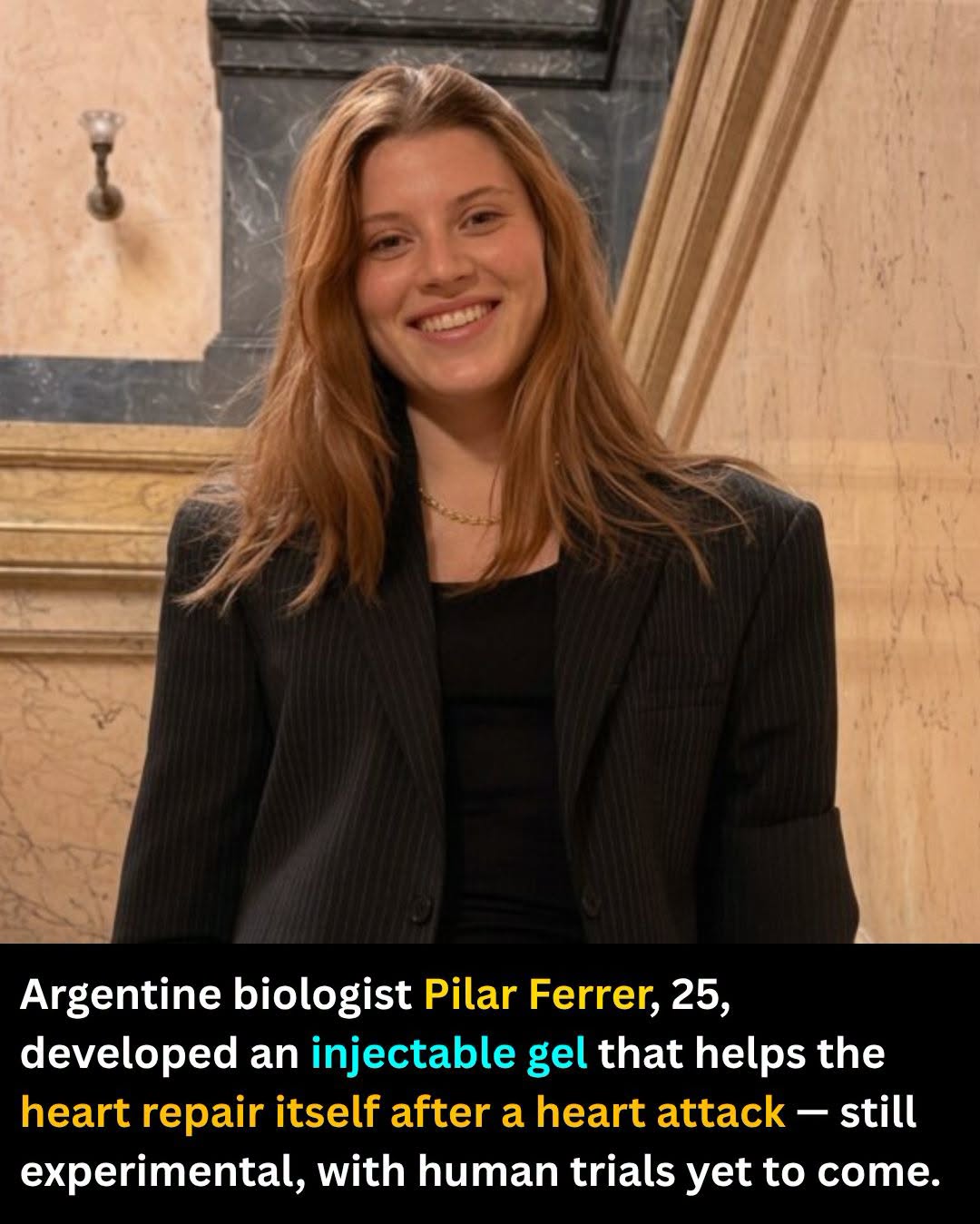

A 25-year-old biologist in Argentina is working on something that could change how doctors treat heart attacks.
Pilar Ferrer graduated in biological sciences from Universidad Favaloro and is now a doctoral fellow at IMETTyB, a joint research institute run by CONICET and the university. She works inside the Cardiovascular Regenerative Medicine Laboratory, led by Dr. Daniela Olea and Dr. María del Rosario Bauzá, and leads the project’s translation into a startup called Amnova Biotech, which she founded in 2024.
The problem the team is trying to solve is fundamental to how the heart works. Most organs in the body have some ability to repair themselves after injury. The heart does not. When a heart attack cuts off blood flow, the affected muscle tissue dies and is replaced by scar tissue instead of working heart muscle. That scar tissue cannot contract the way healthy muscle does, which permanently weakens the heart’s pumping ability. Over time this often leads to heart failure, and in severe cases, a heart transplant becomes the only remaining option.
Ferrer’s approach is to intervene right at the site of the damage. The team developed an injectable hydrogel inspired by the amniotic membrane, a thin tissue from the placenta already used in other areas of regenerative medicine for its natural healing properties. When applied directly onto the injured area of the heart, typically during cardiac surgery, the gel acts as a scaffold. It does not contain live cells itself, but it creates a supportive structure that encourages the heart’s own cells to grow, reorganize, and begin repairing the damaged tissue rather than simply scarring over it.
The research has moved through stages. It started with laboratory tests on cells to confirm the biological effect. From there, the team advanced to trials in sheep, chosen because the structure and size of a sheep’s heart closely resembles a human heart. In those trials, the gel reduced the size of the area affected by the heart attack and measurably improved the heart’s pumping function within 28 days of treatment.
The project drew wider public attention after Ferrer appeared on the Argentine TV program Otro día perdido on July 2, 2026, where host Mario Pergolini reacted with visible surprise as she explained the science and its potential.
Human clinical trials have not begun yet. This is still an experimental, preclinical therapy, and there are real regulatory and scientific hurdles ahead before it could ever reach patients. But if future studies confirm it works safely in humans, it represents a genuinely new strategy in cardiology: not just managing the damage after a heart attack, but helping the heart actually repair itself